
If you own a commercial building in New Jersey, there is a good chance the most expensive piece of equipment on the property is also the oldest. Rooftop units, boilers and chillers tend to stay in service long after they stop running efficiently, and most owners only think about them when one fails in July or January.
Download Printable Article (PDF) >>>
What many owners don’t realize is that New Jersey’s utilities will pay for a large share of replacing that equipment before it fails. Typical incentives cover 50–80% of total project cost, with most projects landing at up to 70%. For an owner weighing capital expenses against NOI, that changes the math on a project that would otherwise sit on the deferred-maintenance list for years.
This guide explains how New Jersey commercial HVAC incentives work, who runs them, the timing mistake that costs owners the most, and what an upgrade means when it is time to lease, refinance or sell.
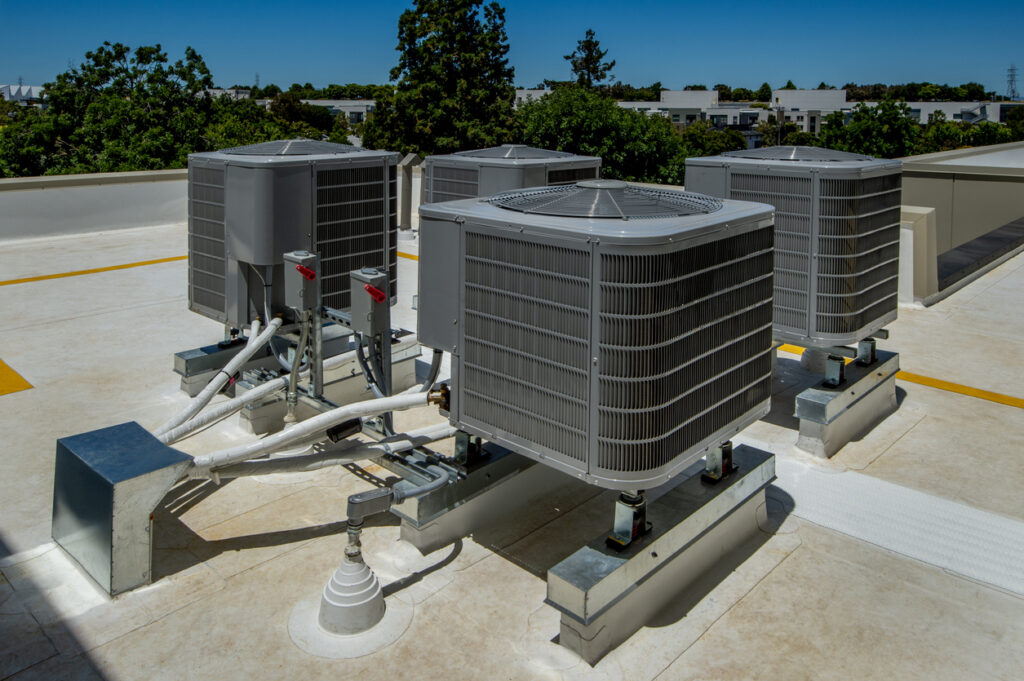
Why Aging Commercial HVAC is a Real Estate Issue, Not Just a Maintenance Issue
New Jersey’s building stock is old. According to federal building survey data, the Middle Atlantic region has the oldest median building age of any census division in the country: 48 years, compared with 36 nationally. Older buildings tend to hold older mechanical systems, and older systems are where the gap between what a building uses and what it could use is widest.
The gap shows up across the line of an investment:
-
Operating costs and NOI. An inefficient system raises utility costs every month. In a gross or modified gross lease, that comes straight out of the owner’s income.
-
Leasing. Tenants notice comfort problems long before they notice the equipment. Hot and cold spots, noisy units and frequent service calls make renewals harder.
-
Due diligence. Buyers and their engineers look hard at mechanical systems. Equipment near the end of its useful life shows up in a property condition report and often turns into a price reduction or a credit at closing.
-
Capital planning. A failed boiler or rooftop unit becomes an emergency purchase, usually at the worst time of year and the worst price.
A working unit isn’t necessarily an efficient one. Equipment that still runs every day can cost significantly more to operate than a properly sized modern system, and that difference is exactly what the incentive programs are designed to pay for.
Who Actually Pays: Your Utility, Not the State
One of the most common points of confusion is where the money comes from. New Jersey’s Clean Energy Program has not run commercial efficiency programs directly since July 2021. Today, the incentives are administered by the state’s investor-owned utilities under Board of Public Utilities oversight.
That means the program your building qualifies for depends on who bills you, not which town you’re in. Utility territory lines don’t follow municipal boundaries, and electric and gas service usually come from two different companies, each with its own program and rules.
For owners in Wolf CRE’s core South Jersey market, the main utilities are:
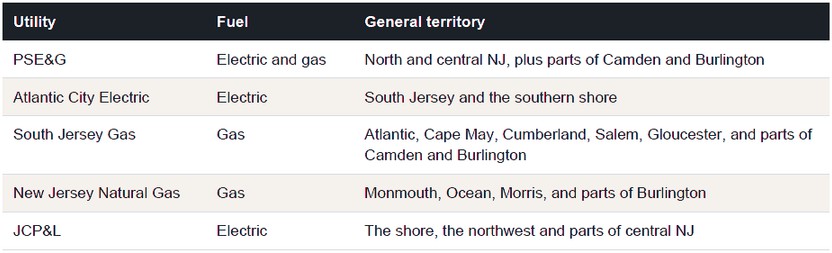
The fastest way to check is to look at the top of your electric and gas bills. In PSE&G territory, a single project can qualify on both the electric and gas side through one utility. Elsewhere, it is usually two separate applications. Rivet Energy ‘s overview of how New Jersey ‘s commercial HVAC incentives work breaks down each utility ‘s program in more detail.
What the Incentives Pay For
The utilities are not paying for new equipment. They are paying for a reduction in the energy your building uses, and the incentive is sized to how large that reduction is.
That one principle explains how the programs behave:
-
Older, more wasteful equipment is a better candidate. The bigger the gap between old and new, the bigger the incentive.
-
Heat pumps tend to attract the largest incentives, especially when they replace both an old boiler and separate cooling equipment in one project.
-
New construction doesn’t qualify. A new building is built to code, so there is no inefficient baseline to improve on.
-
The process starts with data, not a price list. A survey of the building and twelve months of electric and gas bills feed an energy model, and that model sets the incentive.
Rates also differ by utility. PSE&G’s current commercial rate card pays per ton of cooling capacity, Atlantic City Electric also pays per ton at a different rate, and JCP&L pays per-unit amounts that step up by equipment size. For an owner with properties across several territories, the same capital spent in two buildings may not come back at the same rate.
Eligible commercial HVAC equipment typically includes:
-
Packaged rooftop units, common on office, retail and flex buildings
-
Commercial boilers, especially oversized older units in multifamily and office properties
-
Commercial and multifamily heat pumps
-
Chillers in larger office and medical buildings
-
PTAC units in hotels and older apartment buildings
-
Ductless mini-split systems for buildings without ductwork
The Timing Mistake That Costs Owners the Most
If there is one thing every New Jersey property owner should know before replacing HVAC equipment, it’s this: apply for the incentive before you buy anything.
Mostownersassumetherebateispaperworkthatfollowstheproject.Inpractice,itworks theotherwayaround.Theapplicationrecordsthebuilding’sstartingcondition,andthat baselineiswhattheincentiveismeasuredagainst.Oncetheoldequipmenthasbeen removed, it can no longer be documented.
Buying first can cost an owner in three ways:
-
Disqualification. Custom and engineered projects generally require pre-approval before equipment is purchased. Several South Jersey utilities state this directly in their program terms, and projects that proceed without approval risk being ruled ineligible.
-
A closing window. Standard equipment swaps on the prescriptive pathway generally allow a short look-back period. Atlantic City Electric, for example, allows 90 days from project completion. Miss it, and a project that would have qualified does not.
-
A smaller incentive. New Jersey’s Technical Reference Manual measures savings differently depending on the equipment’s condition. If you replace equipment that still works, the savings are measured against that old equipment. If you wait until it fails, savings are measured against a new code-minimum unit instead. Same building, same new equipment, but a meaningfully smaller incentive.
That third point runs against a common instinct. Many owners plan to run equipment until it dies to get full value out of it. In New Jersey, that approach usually means paying higher utility bills for longer and then receiving a smaller incentive at the end. Rivet Energy ‘s guide on why the incentive application has to come before the equipment walks through each utility ‘s rules.
Leased Buildings: Who Gets the Incentive?
In a multi-tenant or leased property, the incentive follows the utility account holder. That isn’t always the party who started the conversation.
If tenants hold their own electric accounts, as is common in retail and some office buildings, the owner and tenant need to agree on who applies and how the savings are shared before the project is scoped. Property managers handling capital projects and tenant improvements should settle this early, along with scheduling work around tenant operations.
What a Commercial HVAC Upgrade Means at Lease, Refinance or Sale
Forinvestorsandowner-users,anHVACreplacementfundedlargelybyincentivescan improve a property’s position in several ways:
-
Lower operating expenses, which support NOI and, by extension, value.
-
Fewer surprises in due diligence. Newer mechanical systems remove a common negotiating point for buyers. Sellers who conduct their own due diligence before a sale can address aging equipment on their own terms, with incentive dollars, rather than giving a credit at closing.
-
A stronger leasing story. Reliable comfort and lower operating costs are easy to market to prospective tenants.
-
Better timing. Replacing on a planned schedule avoids emergency pricing and lets the work happen around tenants.
A Quick Checklist for New Jersey Building Owners
- Find your utilities. Check the top of your electric and gas bills.
- Gather twelve months of bills for both fuels. They are the foundation of the energy model.
- Photograph existing equipment and nameplates while it is still in place.
- Don’t order equipment until you have written incentive approval.
- Confirm the account holder in leased buildings before scoping the project.
- Watch program deadlines. Bonus offers come and go. JCP&L’s current limited-time HVAC offer, for example, is listed as running through December 31, 2026. The broader statewide program framework runs through June 30, 2027, with an interim extension approved to June 30, 2028.
Frequently Asked Questions
How much do New Jersey utilities pay toward commercial HVAC replacement?
Typical incentives cover 50–80% of total project cost, with most projects landing at up to 70%.The final number depends on your utility and how much energy the replacement saves.
Do I have to pay the full cost upfront and wait for a rebate?
Not necessarily. Depending on the program, the incentive can be built into the project structure, and some utilities offer on-bill repayment for the remaining balance.
My equipment still works. Should I wait until it fails?
Usually not. Replacing working equipment lets savings be measured against your existing system, which typically produces a larger incentive than replacing it after failure.
Does this apply to properties in Pennsylvania or New York?
No. The programs described here are specific to New Jersey utilities. Owners with properties in other states should check with their local utility.
What types of buildings qualify?
Existing commercial and multifamily buildings, including office, retail, industrial, hospitality and apartment properties. New construction does not qualify.
The Bottom Line
Aging HVAC is one of the largest capital items in a commercial building, and New Jersey’s utility programs are designed to fund most of its replacement. The owners who benefit most are the ones who plan ahead: they identify their utility, gather their data, and apply before the equipment fails or the order is placed.
For owners evaluating a property’s capital needs ahead of a lease, refinance or sale, an incentive review belongs on the list alongside property tax appeals and insurance reviews.
About Rivet Energy
Rivet Energy helps commercial and multifamily building owners across all 21 New Jersey counties replace aging HVAC equipment using utility incentive programs. Rivet handles the building survey, energy modeling and utility applications, and licensed partner contractors complete the installation.

Learn more at https://rivetenergypartners.com or call (848) 261-9510.